
A Visual Guide to Heels, Foot Arches and Leg Alignment
Use clear English illustrations to describe what you notice about a child’s heels, arches and leg alignment, and prepare better questions for a professional.
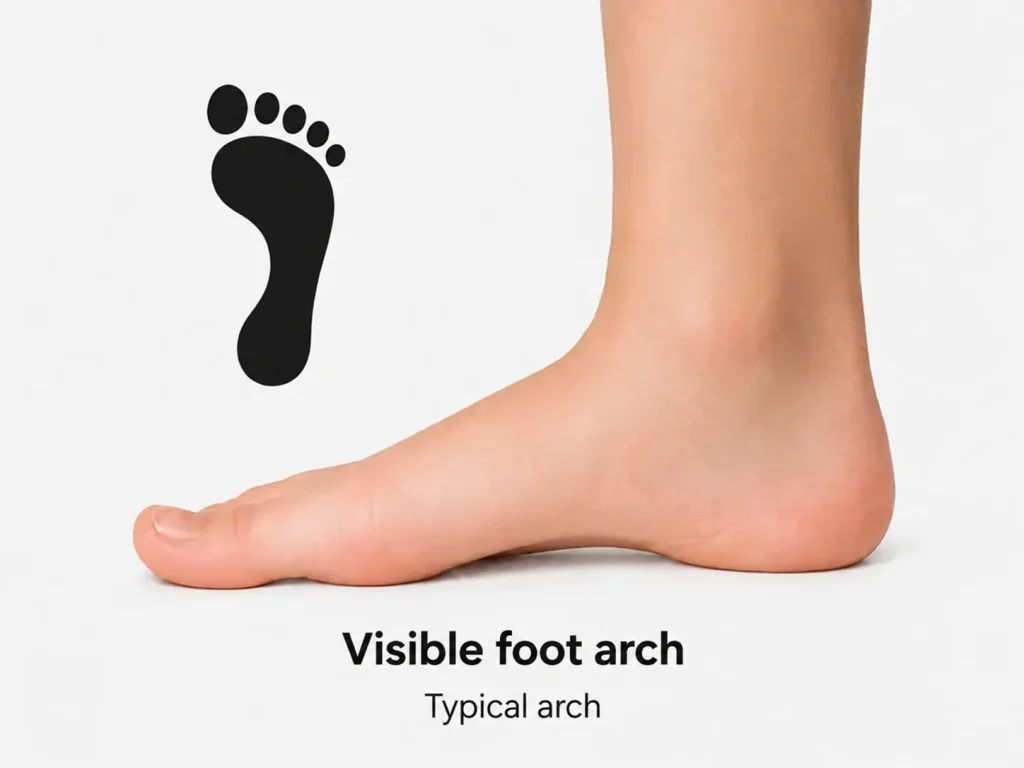
Parents sometimes notice a low arch, an inward-looking heel or feet pointing in different directions. The illustrations below provide vocabulary for describing what you see. They are visual examples, not a scoring system or a way to diagnose a child from a photograph.
A single standing position cannot tell you how a foot functions during walking, running or play. Age, comfort, flexibility and the child’s history also matter. Use the pictures to support a conversation rather than to label a child’s body as wrong.
1. Looking at the heels
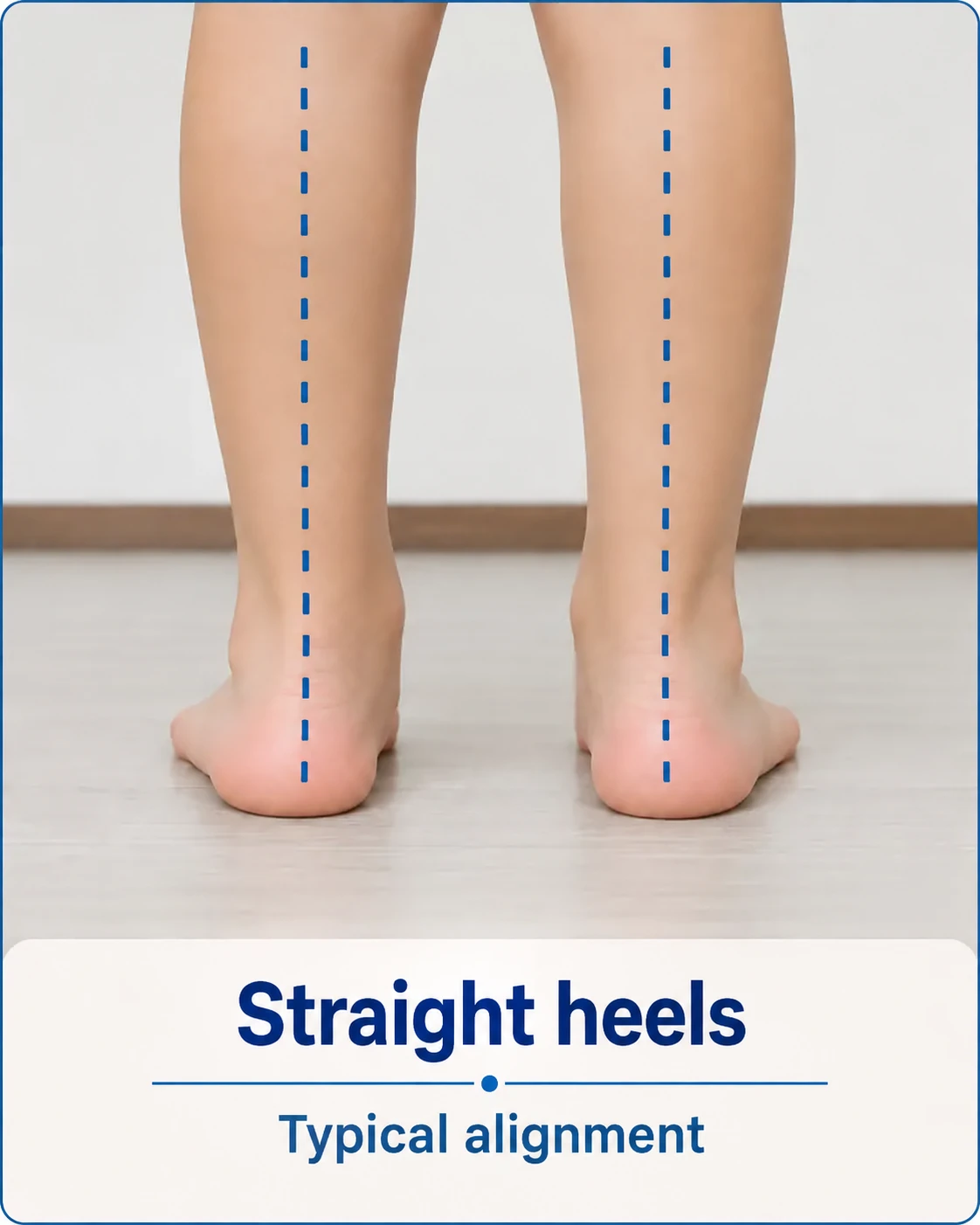
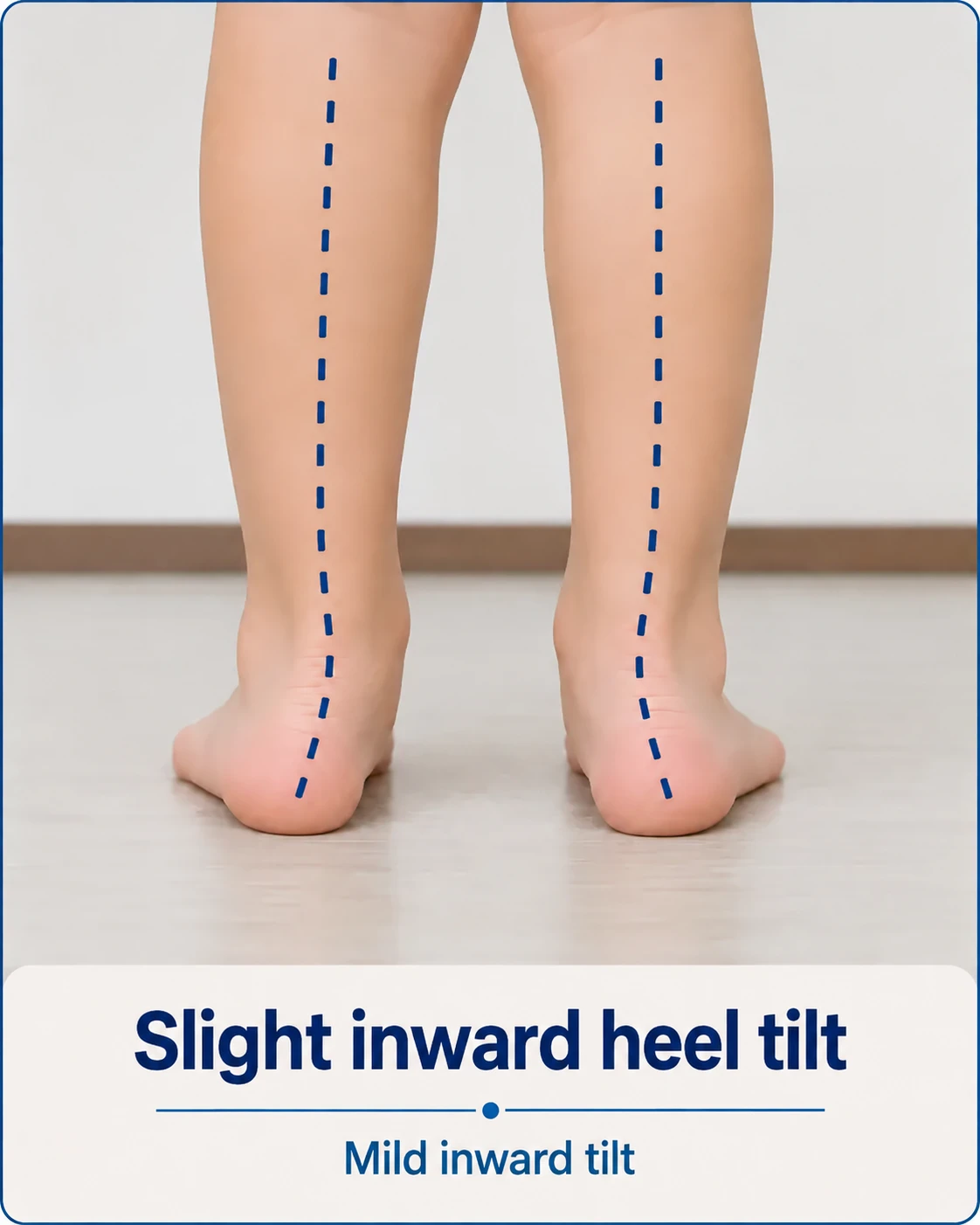
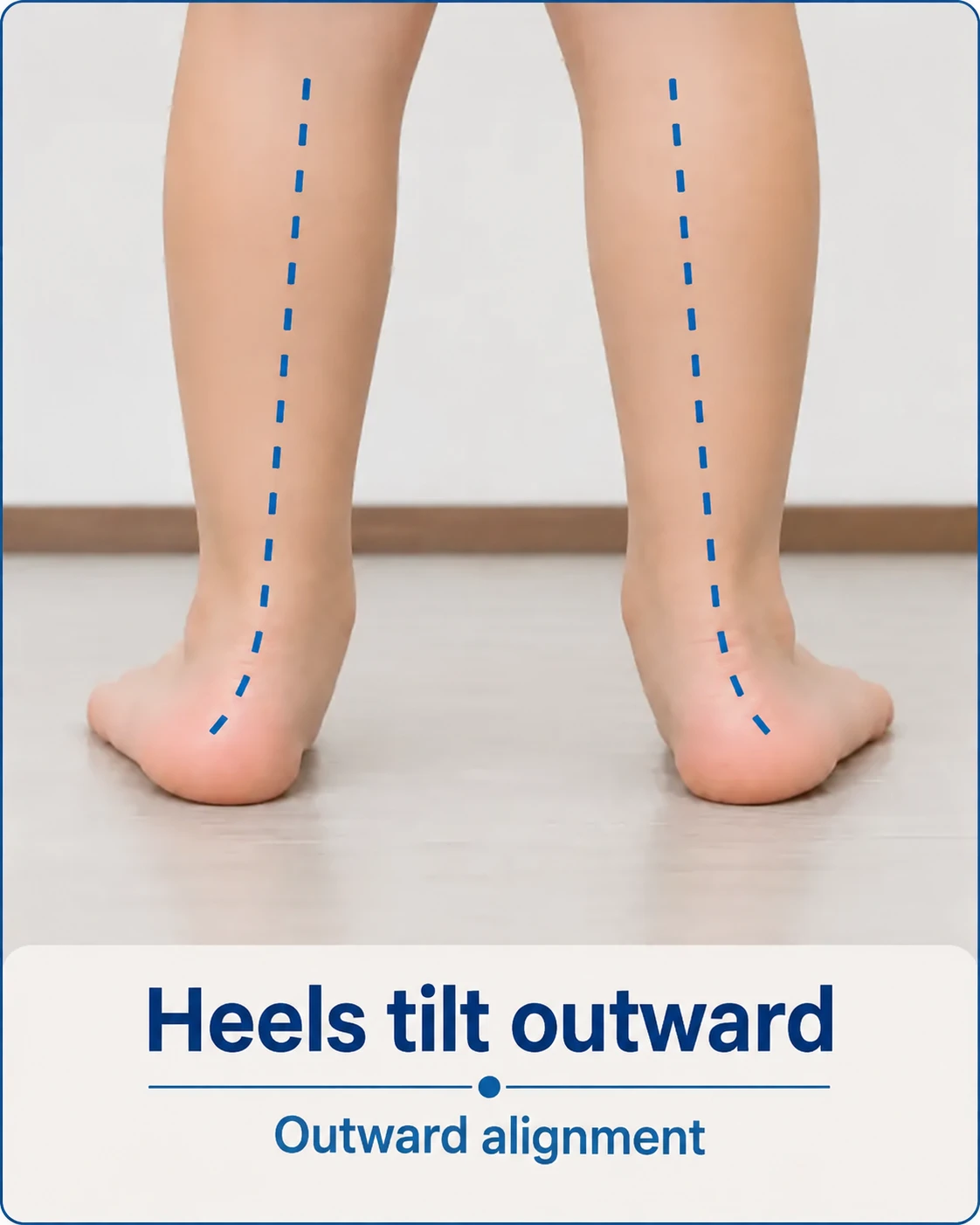
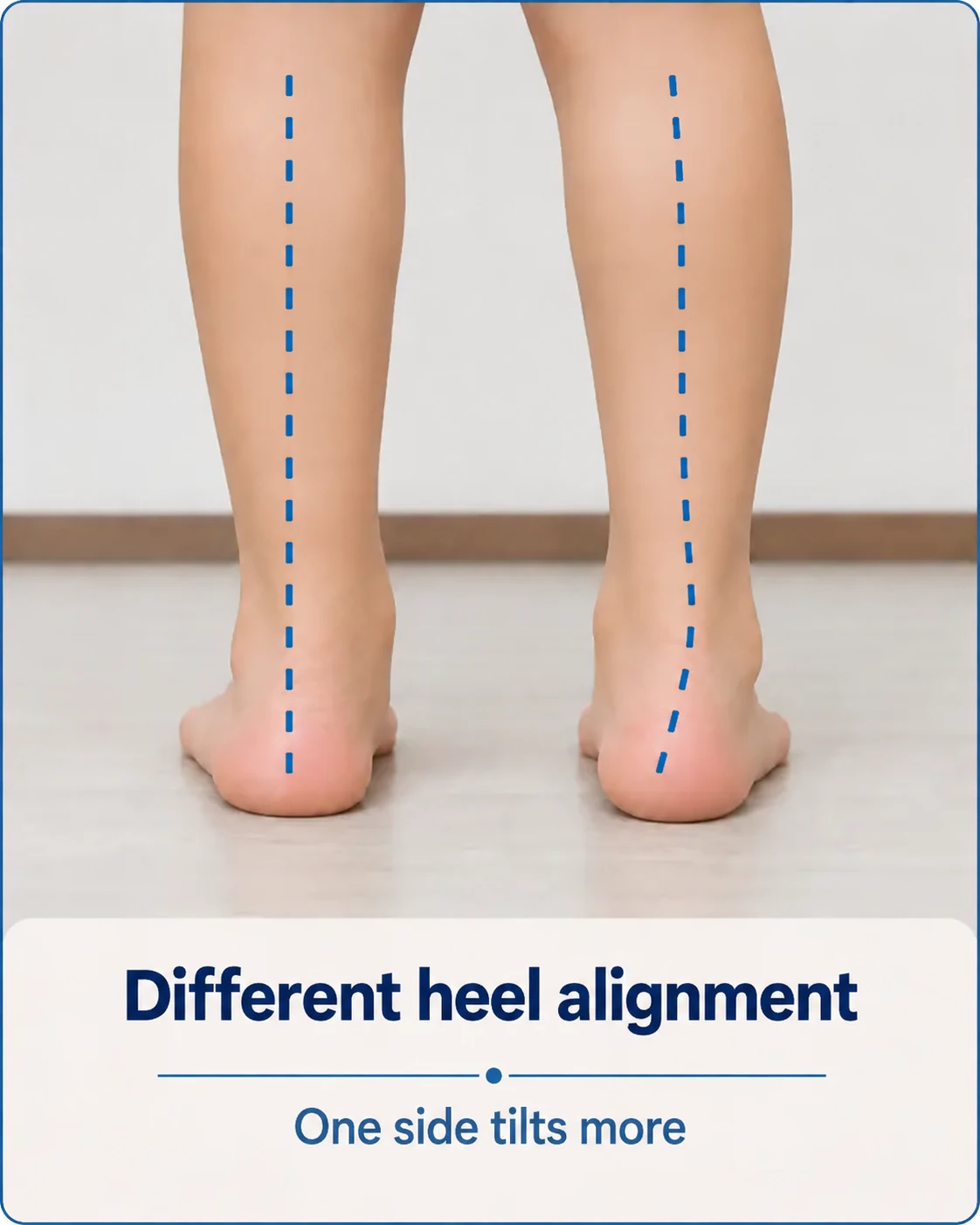
From behind, you may notice heels that appear straight, tilted inward, tilted outward or different from one another. Describe the visible direction and whether it looks similar on both sides. Do not use the amount of tilt in an illustration as a clinical threshold.
2. Looking at the arches
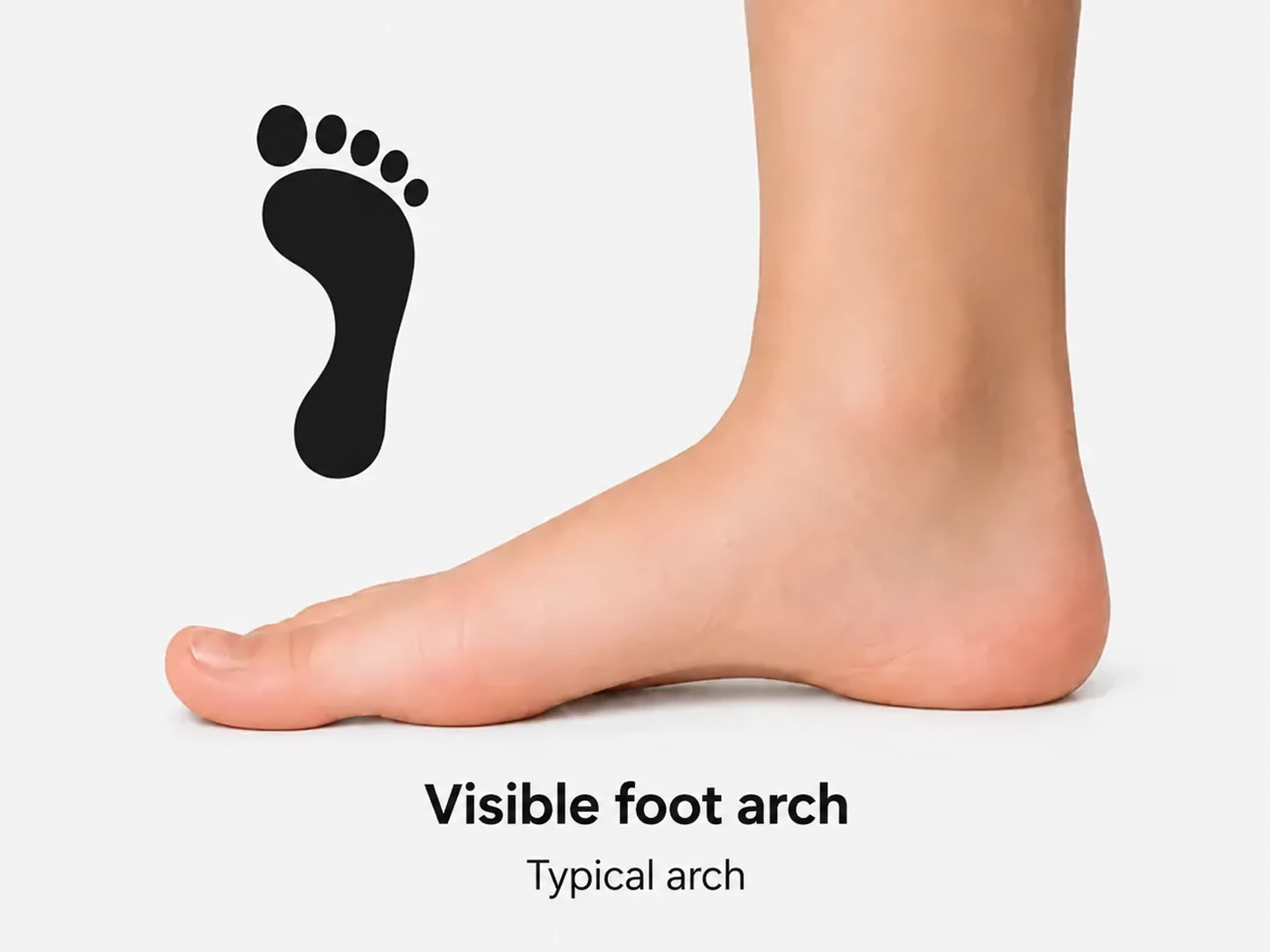
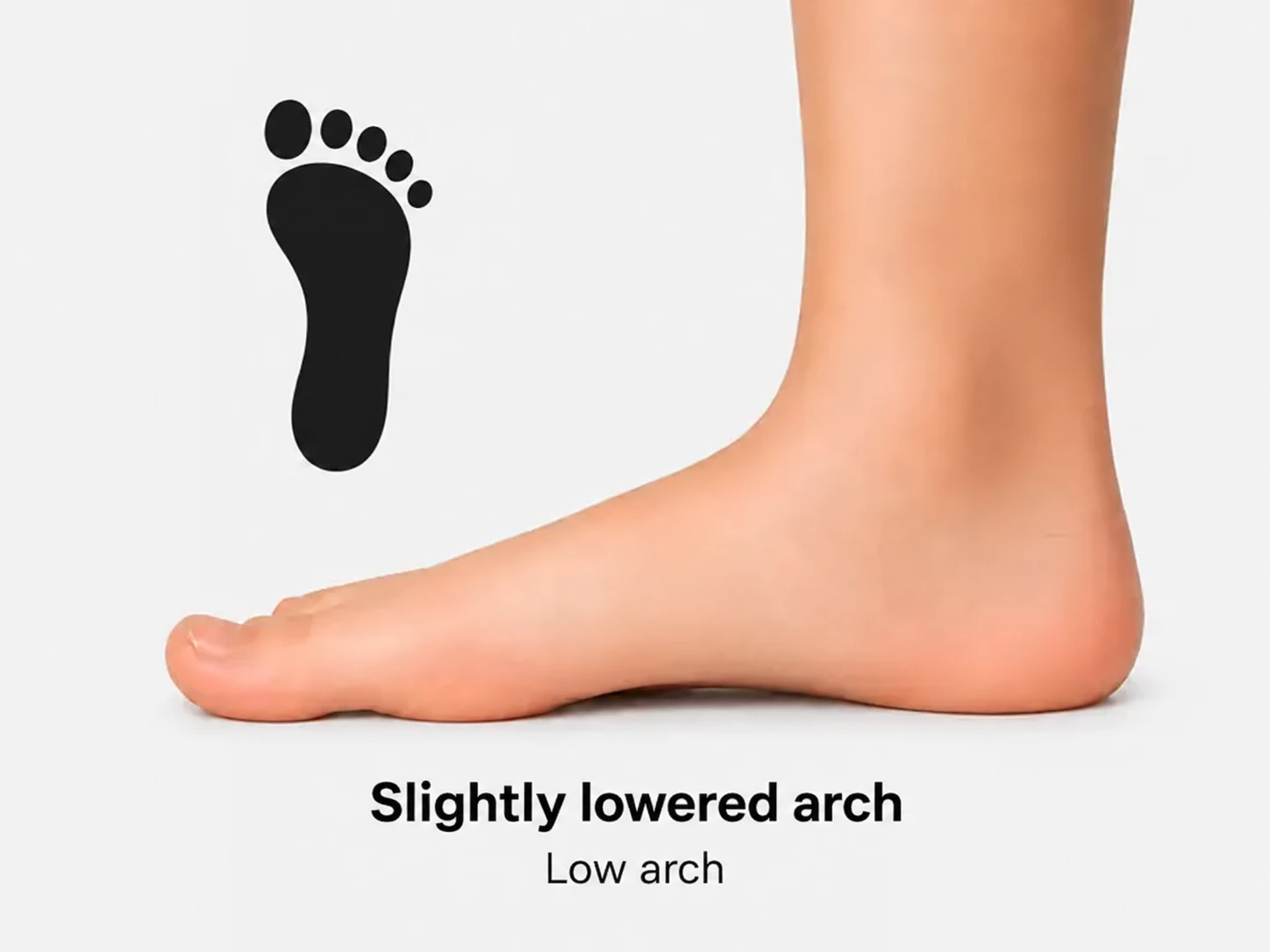
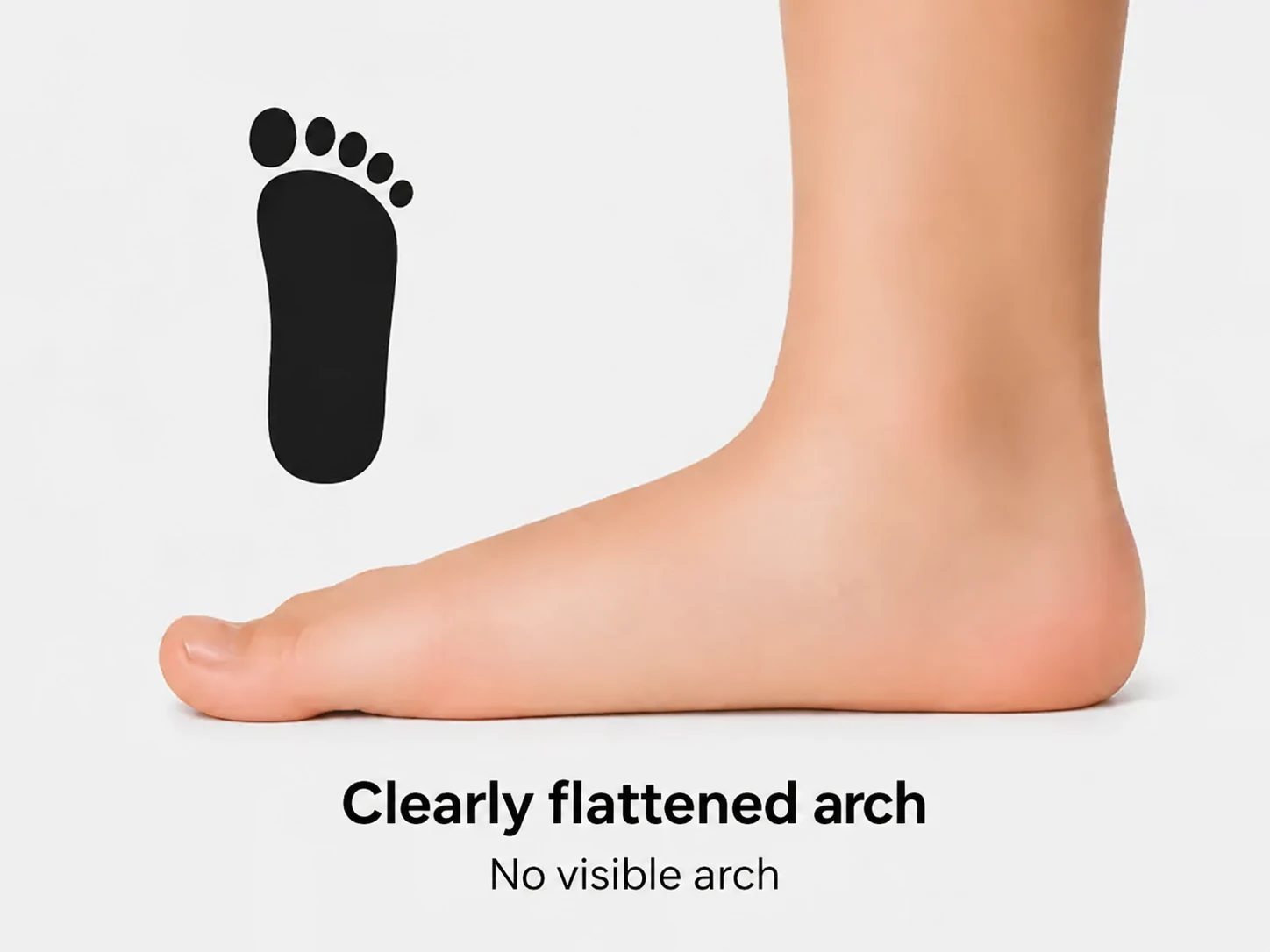
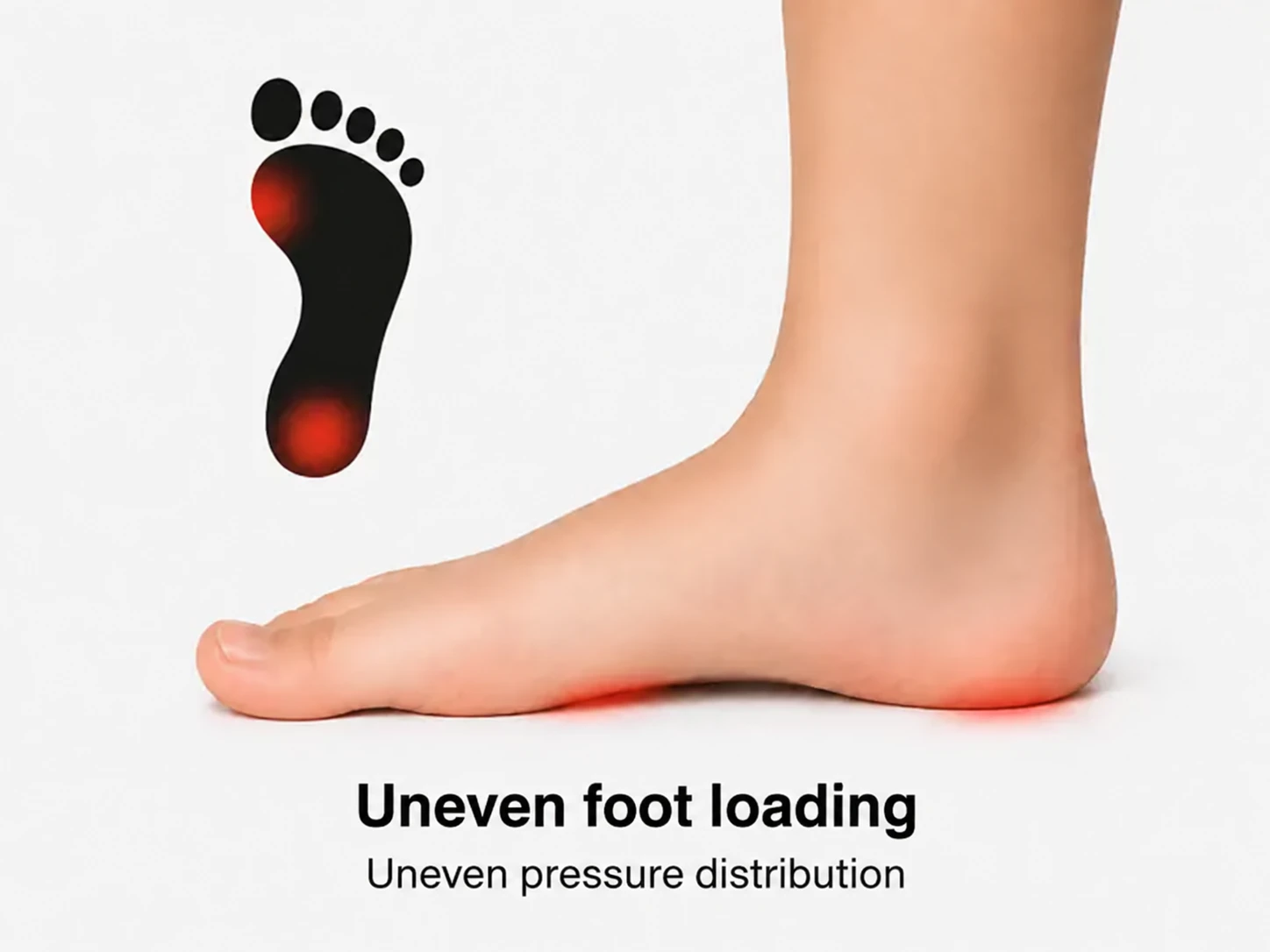
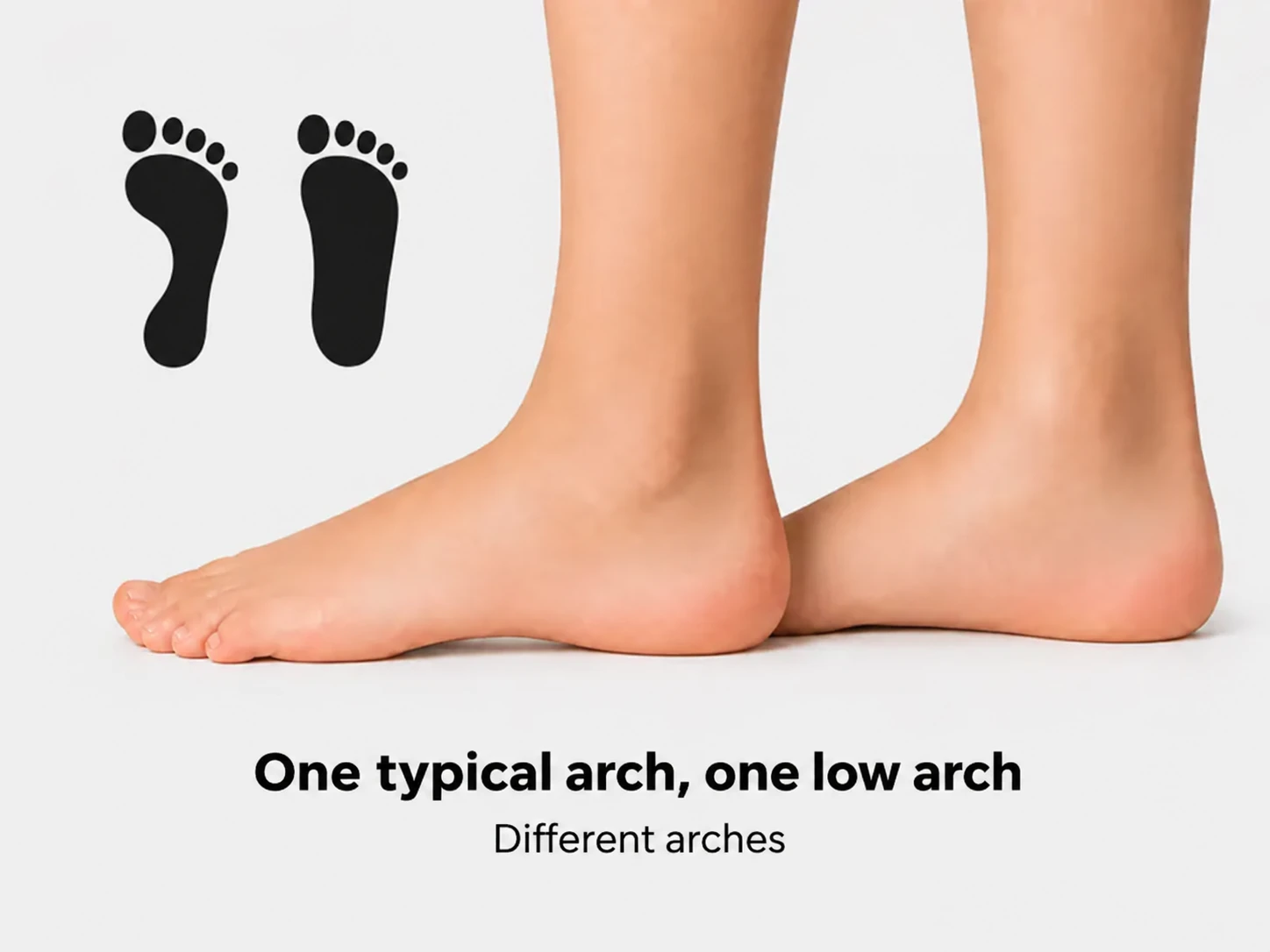
An arch may look higher or lower depending on how a child is standing. AAOS explains that flexible flatfoot commonly involves an arch that becomes less visible while standing and reappears when sitting or standing on tiptoes. Painless flexible flatfoot usually does not need treatment. Read the AAOS explanation of flexible flatfoot in children.
3. Looking at the legs, ankles and foot direction
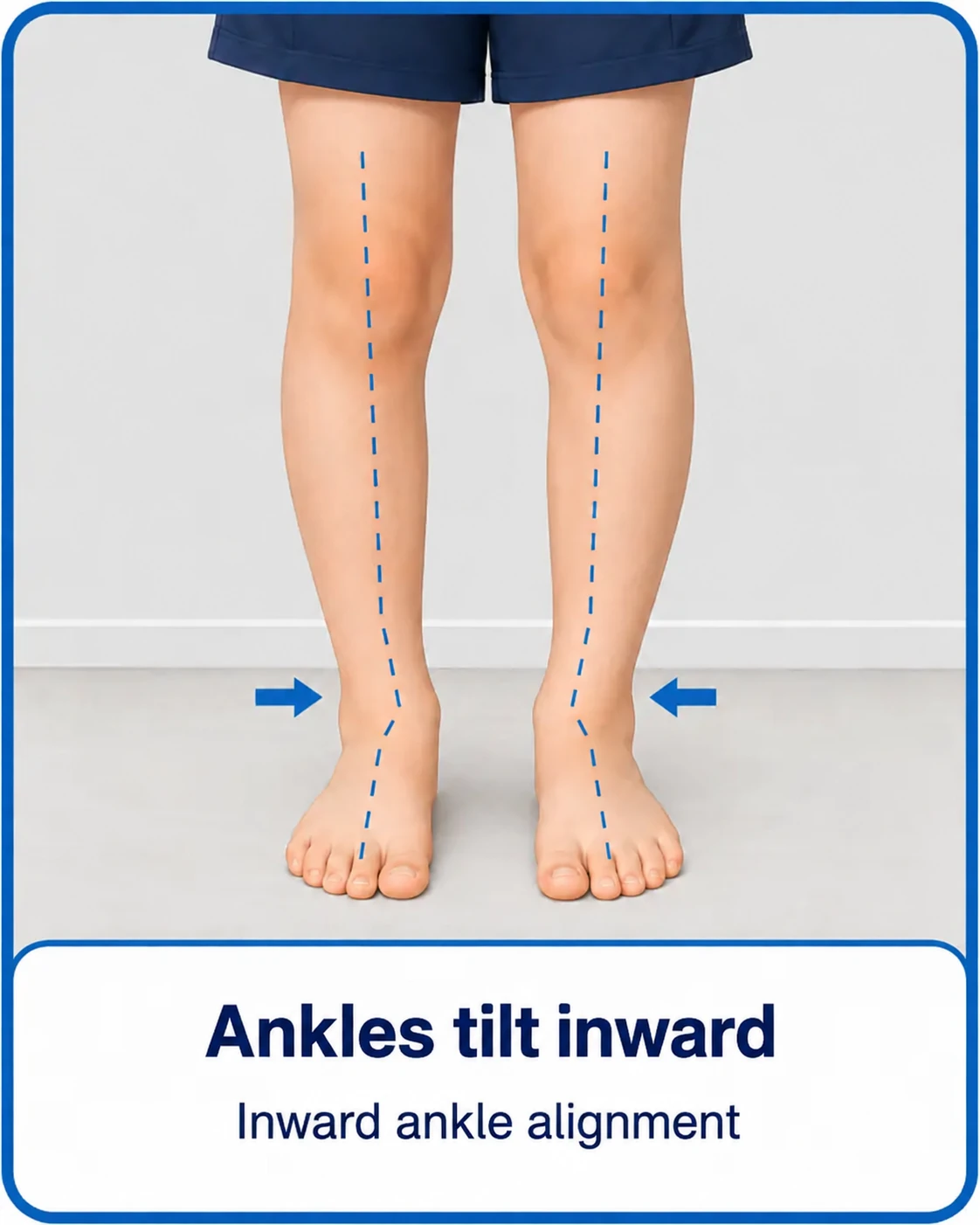
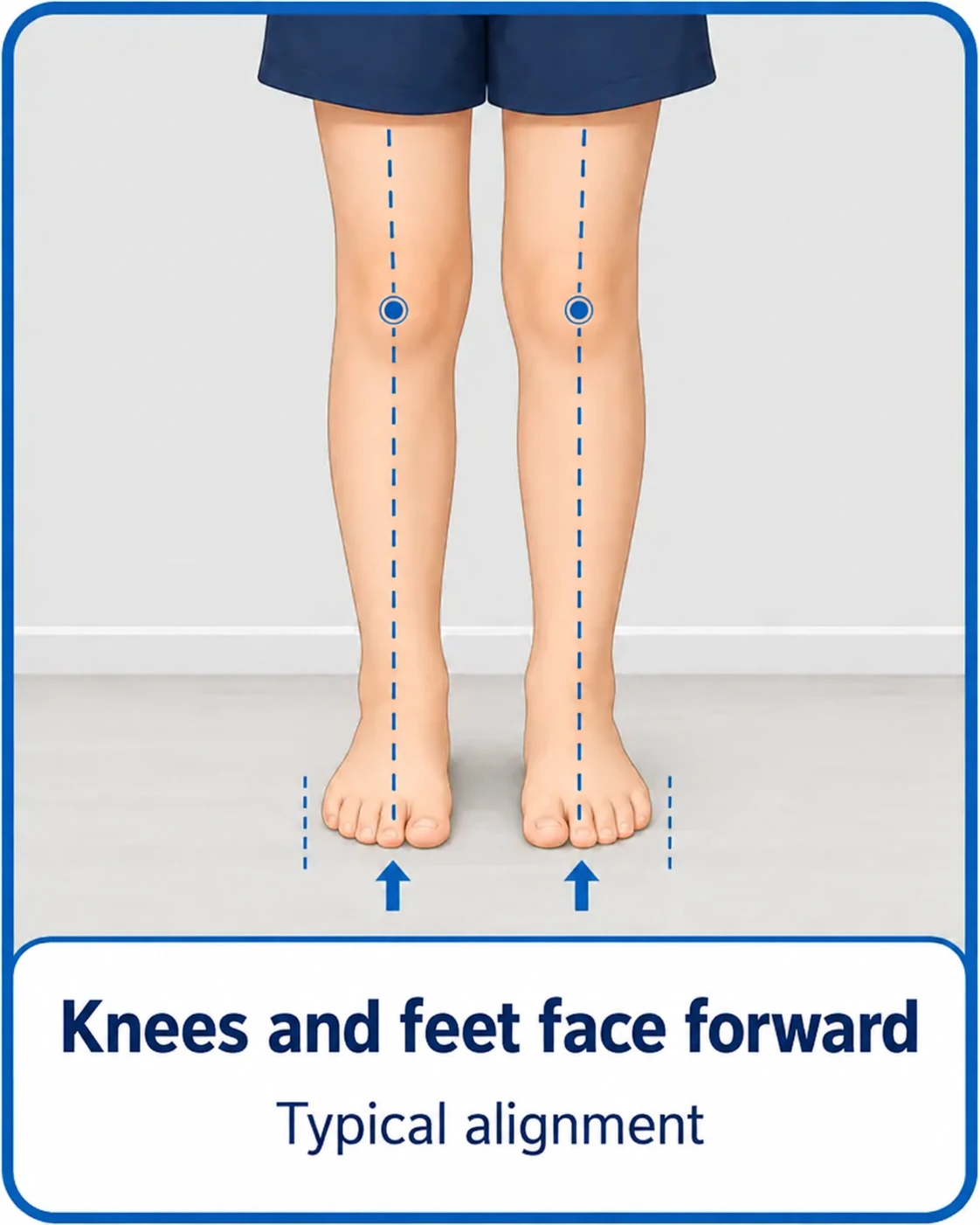
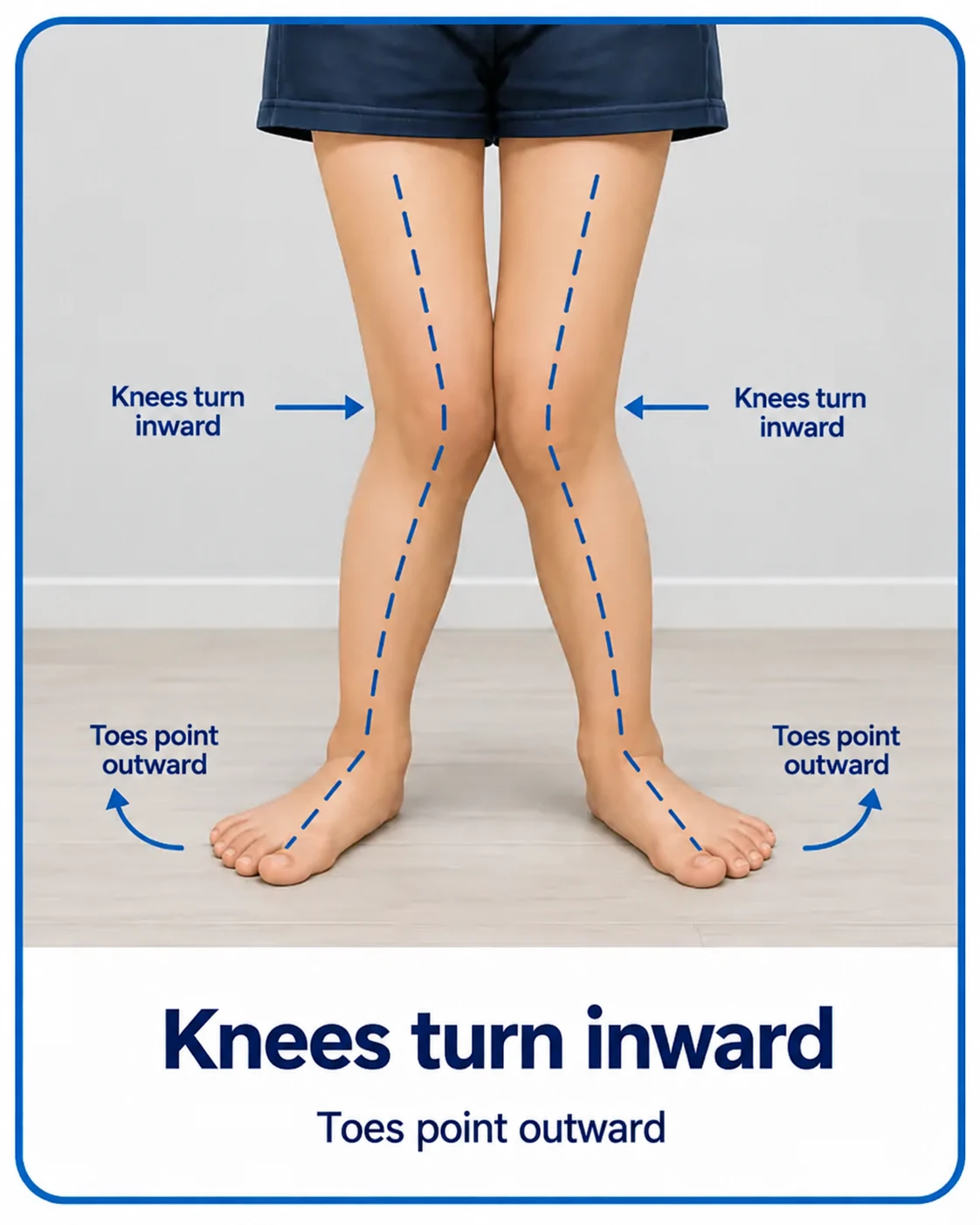
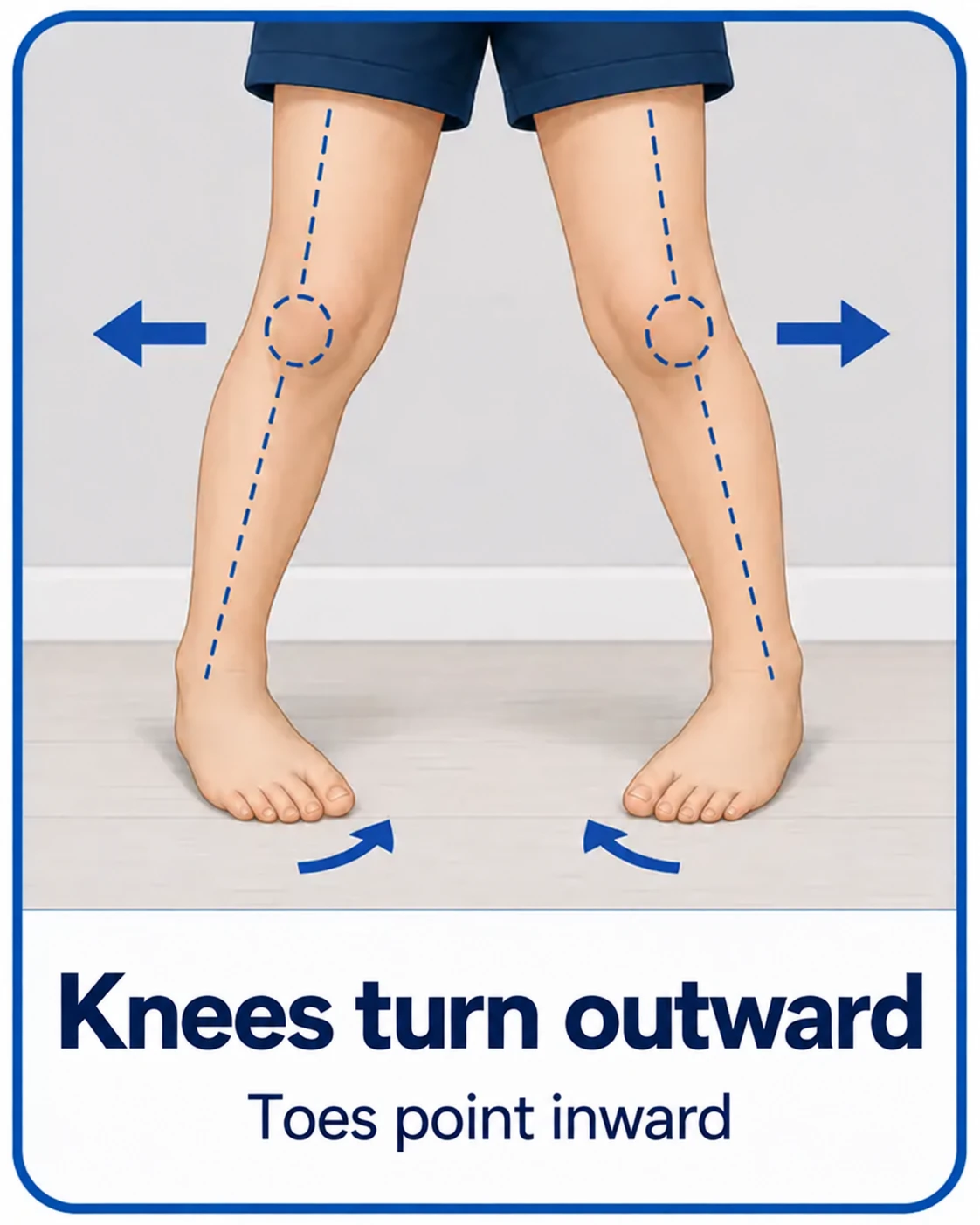
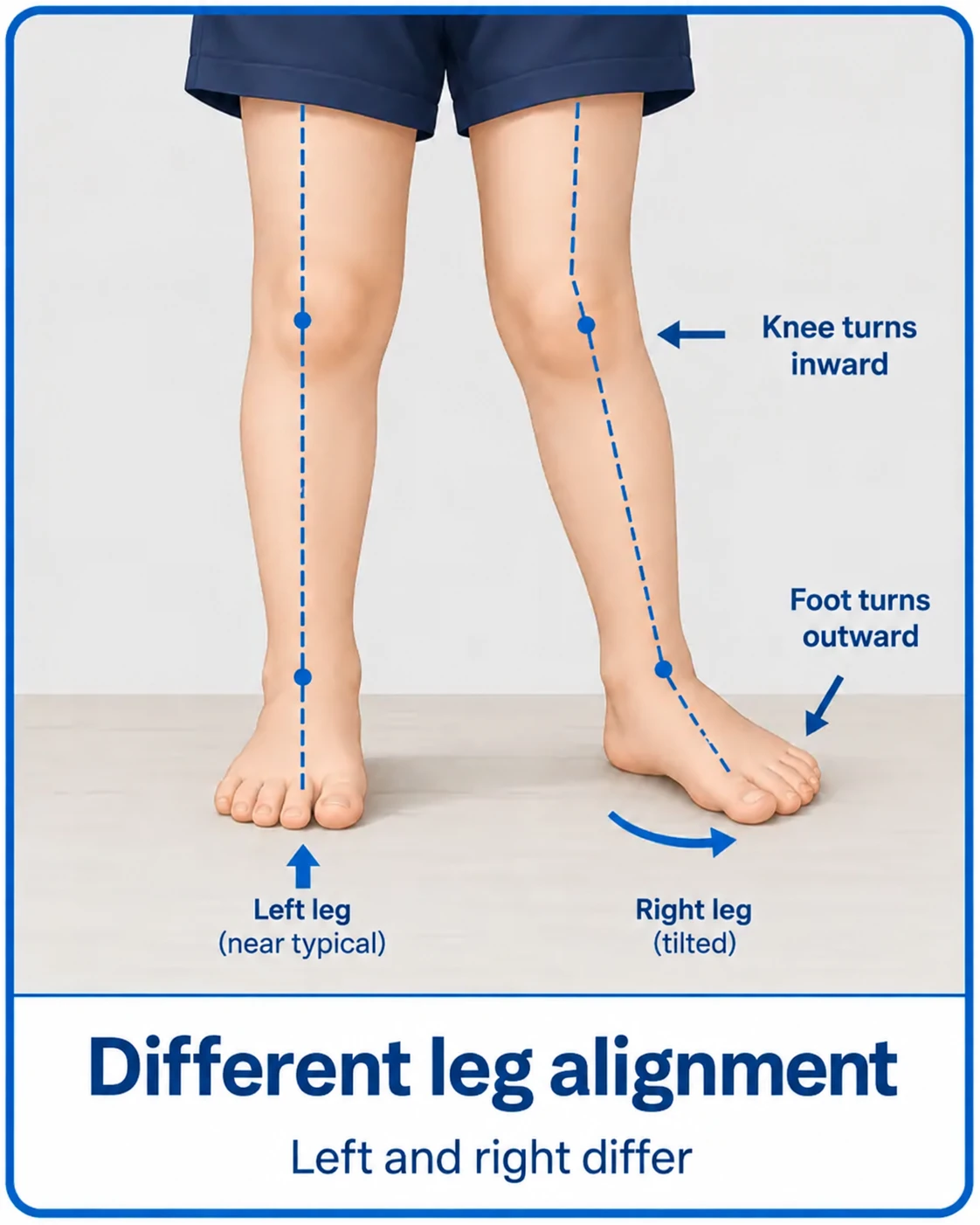
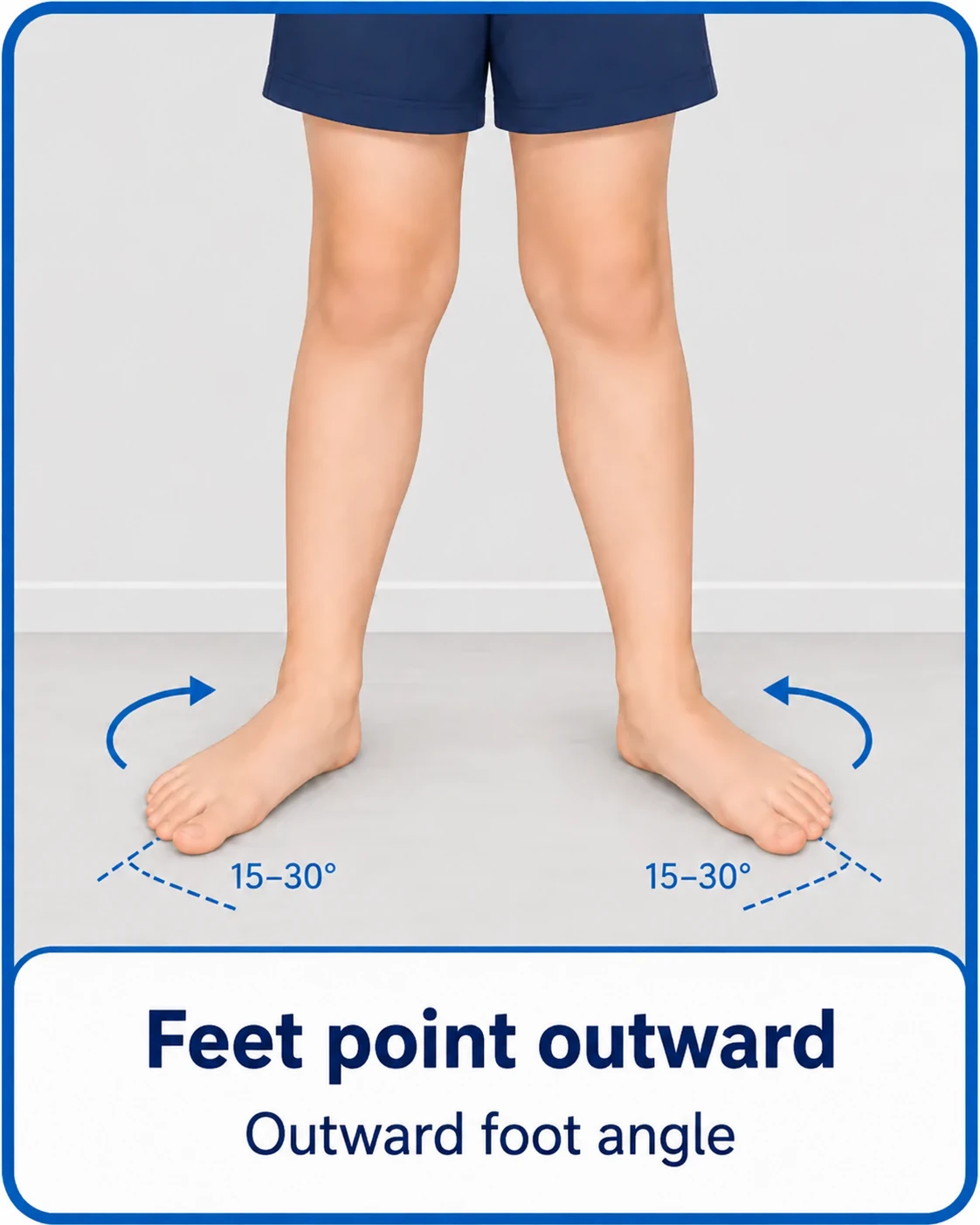
The following pictures separate several visual observations: ankle position, knee direction, the direction of the toes and differences between the two legs. Their labels describe the drawings. They do not establish a cause, severity or treatment plan. The angle shown in the final image is illustrative, not a diagnostic cutoff.
Turn an observation into a useful question
Instead of asking whether a picture is “good” or “bad,” record what you notice and how your child feels. Does it occur on both sides? Is there discomfort during ordinary activities? Has something changed? These details are more useful than assigning a condition from an image.
AAOS recommends a doctor’s assessment when flat feet cause persistent pain. A clinician can examine flexibility and distinguish different types of flat feet. Fitness coaching should work within that guidance when clinical concerns are present.
Explore movement support
Our visual foot screening tool offers a structured way to review illustrations in English. Its result is an educational starting point, not a medical diagnosis. Learn about Transform Kid’s Flat Feet Support program and flexible flat feet and exercise for more context.
Get to know our programs
Explore how personalized coaching connects our four areas of focus.
Explore the programs ↗