
Understanding Progress in a Child’s Training Journey
Look beyond before-and-after photos. Understand training progress through consistent records, movement skills, confidence and each child’s growth context.
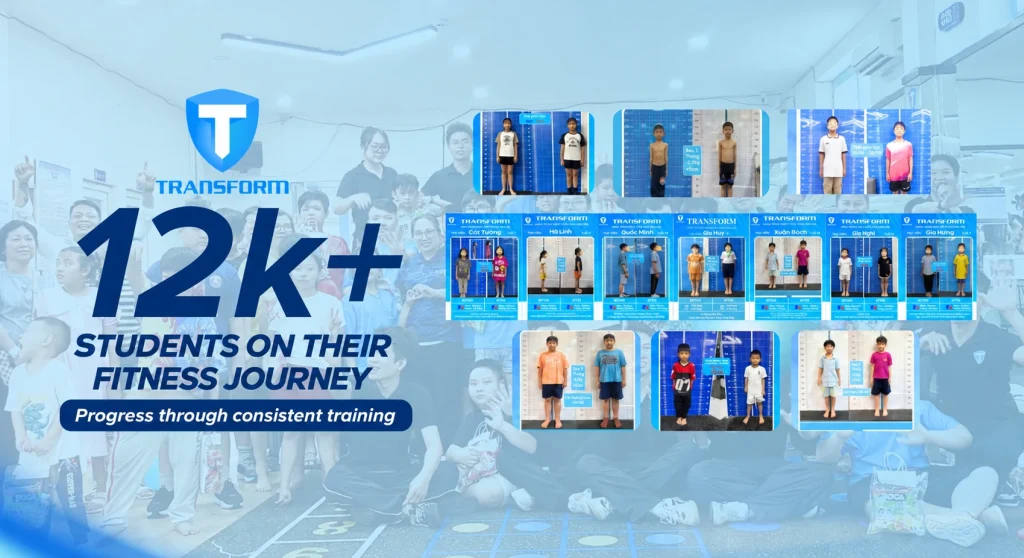
Parents naturally want to know whether a training program is helping. A photo or a single measurement can start that conversation, but it cannot tell the whole story. Progress becomes more useful when we describe what changed, over what period and under what conditions.
The image above shares examples from Transform Kid’s Vietnam materials. Its “12K+” headline is a brand-reported participation milestone. The small student records remain in their original form; they show individual experiences and should not be read as a result every child can expect.
Notice the everyday changes
A child who once avoided a movement may become willing to try it. They may follow instructions more confidently, control a familiar task more smoothly or look forward to returning. These observations give parents and coaches specific things to discuss alongside measurements.
- Participation: does the child engage with the session?
- Skills: what can they now do with appropriate guidance?
- Confidence: which activities feel less intimidating?
- Consistency: is movement becoming part of their routine?
Put growth measurements in context
Children grow naturally, and the timing of growth differs. Genetics, nutrition and other environmental factors influence height. MedlinePlus describes how these factors interact. A height increase during a period of training does not, by itself, establish that training caused it.
For a useful record, note the date and measurement method, and try to keep conditions consistent. If a pattern concerns you, take the record to your child’s healthcare professional. Our height-for-age tool can support a first conversation, but it does not diagnose a growth problem.
Use photographs thoughtfully
Camera angle, stance, clothing and lighting can change how a person looks. Compare photographs cautiously and avoid treating appearance as the only measure of success. Children deserve encouragement without pressure to match another child’s body or timeline.
Agree on the next practical step
At a review, ask the coach to describe one improvement, one current challenge and the next achievable goal. This keeps the conversation useful for the child and the family. Read more about how we review and adjust the coaching journey.
Get to know our programs
Explore how personalized coaching connects our four areas of focus.
Explore the programs ↗